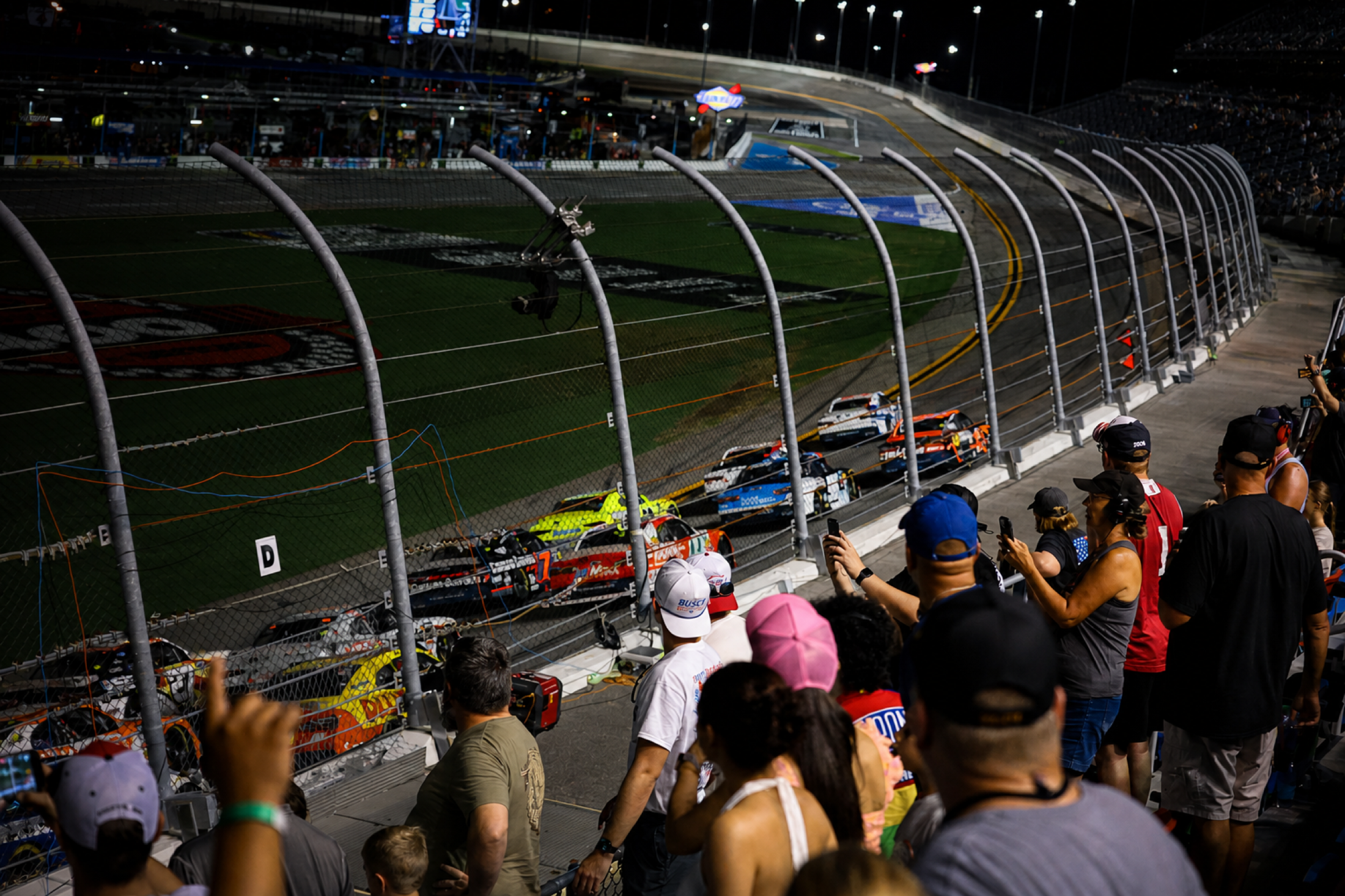
NASCAR returned to Daytona for the Coke Zero Sugar 400, closing out the regular season and setting the field for the Chase. Ryan Preece earned his first Cup Series victory and raced his way into the final postseason position.
That is the kind of drama Daytona is supposed to create.
What NASCAR does not need is manufactured drama created by stopping the race at the end of every stage.
I have become more opposed to automatic stage cautions than ever.
To be clear, I do not have a problem with stage points. If NASCAR wants to draw a line at a predetermined lap and award points to the top ten drivers at that moment, that is fine. It rewards teams that run well throughout the race instead of saving everything for the final twenty laps.
Award the points.
Just do not stop the race.
Award the points.
Just do not stop the race.
A race should be interrupted because something happened that requires an interruption. A car crashed. There is debris on the track. Fluid has been dropped. A safety vehicle or worker needs access to the racing surface.
Those are real cautions.
The end of a stage is not a real caution. It is a scheduled interruption that NASCAR injects into the race, and every time it happens, it changes the competition.
It changes pit strategy.
It changes fuel strategy.
It changes tire strategy.
It changes track position.
Most importantly, it takes away one of the most difficult decisions a crew chief and driver should have to make: when to pit under green.
Green-flag pit stops require commitment. A team has to decide whether fresh tires and fuel are worth giving up track position. The driver has to enter pit road at speed without making a mistake. The crew has to execute. Then everyone has to wait and see whether the strategy works—or whether a natural caution comes out thirty seconds later and ruins the entire plan.
That is racing.
Knowing that NASCAR is going to throw a caution at the end of a stage changes all of it. Teams begin planning around the interruption because the interruption is guaranteed.
NASCAR recently introduced another procedure intended to reduce the number of laps wasted under caution. If a naturally occurring caution falls within the final ten laps before a scheduled stage break, NASCAR can combine that caution with the stage break instead of restarting the race only to throw another yellow a few laps later.
On paper, that probably sounded clever.
In practice, it adds another layer that fans, teams, and broadcasters have to interpret in real time.
Is this caution ending the stage?
Will the race restart?
When will the stage points be awarded?
Can teams pit?
What happens to the running order?
The television broadcasters and the MRN radio team are still learning how to explain the new procedure. If the people assigned to tell us what is happening need several conversations to sort it out, imagine what it feels like to a fan sitting in the grandstands without every monitor, replay, timing screen, and NASCAR official available to the broadcast booth.
A fan should be able to look at the racetrack and have a reasonable idea of what is happening.
Cars racing means the race is underway.
A caution means there is a legitimate reason they cannot continue racing safely.
That should not be complicated.
The new procedure may reduce the total number of caution laps in certain situations, and that is an improvement over running one long caution, going green briefly, and then immediately throwing another yellow for the stage break.
But it is still a repair to a problem NASCAR created.
The easier solution is to eliminate automatic stage cautions.
Keep the scoring markers. At the designated lap, record the running order and award the points. Then let the race continue.
If teams want to pit, let them make a green-flag stop and accept the risk. If they want to wait, let them wait for a legitimate caution that may—or may not—come.
That uncertainty is not a flaw.
That is strategy.
That uncertainty is not a flaw.
That is strategy.
NASCAR also needs to keep working on the length of legitimate cautions. Fans have been complaining about extended yellow-flag periods for good reason. Sometimes cleanup and safety work genuinely require time, but every caution should not become a procession of laps while everyone waits for the race to restart.
Racing organizations should also be exploring better debris-detection and retrieval technology. Whether that eventually involves specialized drones, remotely operated equipment, improved cameras, or something that has not been developed yet, the goal should be simple: handle minor debris safely without stopping or slowing an entire race longer than necessary.
Safety comes first.
But speed and efficiency should follow closely behind it.
For fans watching from home, every extended caution creates more airtime that must be filled. That usually means repeated explanations, replays we have already seen, or more commercials. The problem of commercial interruptions during racing deserves its own discussion, but scheduled stage cautions certainly do not help.
NASCAR does not need to manufacture pauses to make racing more entertaining.
Daytona proved that again.
A driver searching for his first Cup victory won the regular-season finale and raced his way into the postseason. Teams had everything on the line. Every move mattered.
That was real drama.
Award the stage points if they matter to the championship.
Then keep the race green.
Racing Opinion welcomes sharp disagreement. The forum comes later; the position starts here.